A practical 2026 guide to UK online casinos that actually run daily promotions, including free spins, cashback, and drop-and-win tournaments. We compare ten licensed operators and explain which daily offers are worth your time. read our online casino daily promotions UK guide
[ad_1]
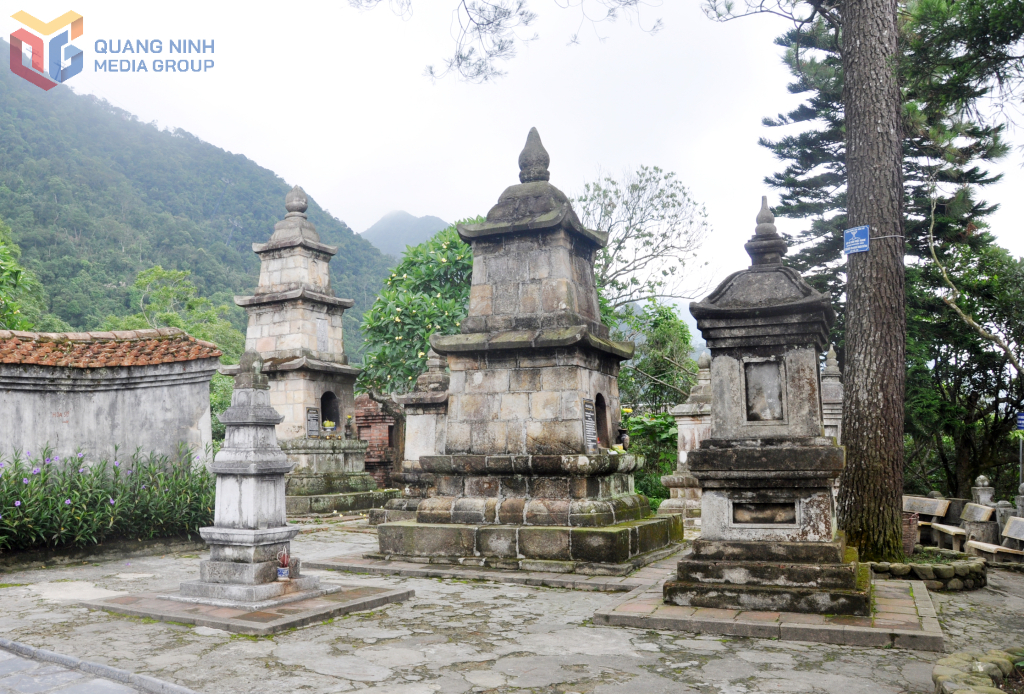
The Yen Tu – Vinh Nghiem – Con Son, Kiep Bac complex, spanning the provinces and cities of Quang Ninh, Bac Ninh, and Hai Phong, encompasses numerous relics and scenic sites. Receiving UNESCO World Heritage status has opened vast opportunities for developing cultural and spiritual tourism while also posing important challenges in strengthening inter-provincial connections for preservation, sustainable development, and attracting visitors in a manner worthy of its heritage value.

This complex stretches across multiple regions, with each locality home to a significant number of relics spread over large areas. While each site carries its own historical and cultural value, together they tell a unified story of the Truc Lam Yen Tu Zen Buddhism, tracing its origins, evolution, and enduring influence on Vietnamese spiritual life for over 700 years. This narrative embodies the complex’s outstanding universal value, attesting to its integrity and authenticity as a heritage site.
Even before its inscription as a UNESCO World Heritage Site, local authorities had made continuous efforts to preserve and promote the heritage in tandem with tourism development. In Quang Ninh, for instance, comprehensive master plans for the conservation and promotion of all three major relic clusters were established more than a decade ago.
The province has not only mobilized public funding but also encouraged socialized investment from businesses, residents, and visitors in restoring and expanding heritage sites, upgrading access roads, and improving connectivity. As a result, the heritage landscapes have been transformed, offering more sustainable infrastructure and creating inviting spaces for visitors to explore, worship, and stay. Beyond the traditional spring festival season, these sites now attract a steady flow of tourists throughout the year.
In Bac Ninh, authorities have issued Resolution No. 112 on tourism development for the 2021-2025 period with a vision to 2030, alongside the project “Reconstructing the Path of Dharma Propagation of the Truc Lam Patriarchs (2023-2030)”. Similarly, Hai Phong has been advancing regional tourism linkages, investing in infrastructure that connects Yen Tu to Con Son-Kiep Bac, and upgrading accommodations, parking areas, and information centers for international visitors.
Now that the Yen Tu – Vinh Nghiem – Con Son, Kiep Bac has been recognized by UNESCO, the heritage complex stands prominently on the world tourism map, promising to attract a larger influx of both domestic and international visitors. Quang Ninh, in particular, has grasped this opportunity as part of its broader vision to develop a heritage-based economy and cultural industries, backed by policies fostering creative and sustainable growth.
According to Le Trong Thanh, Deputy General Director of Tung Lam Development JSC, a major investor in infrastructure and “heritage enterprise” initiatives in Yen Tu, the company’s business philosophy is deeply tied to preserving Yen Tu’s natural, historical, and cultural values: “Yen Tu holds a 700-year-old legacy found nowhere else. We aim to transform this invaluable cultural capital into a source of enduring economic value.”
In Bac Ninh, tourism has been identified as a key economic driver, with the Yen Tu – Vinh Nghiem – Con Son, Kiep Bac heritage space serving as the central axis. The province plans to collaborate on developing interprovincial pilgrimage tours, including routes such as Luy Lau – Dau Pagoda – The western area of Yen Tu – Vinh Nghiem Pagoda, Yen Tu- Con Son – Kiep Bac, and cultural-historical tours combining Quan ho folk songs, traditional craft villages, archaeological sites, and natural landscapes.
Meanwhile, Tay Yen Tu Services JSC, a major local investor, plans to enhance cooperation with travel agencies, expand accommodation and leisure facilities such as a World Buddhist Park and live heritage performance venues and promote the site more widely. In Hai Phong, efforts are underway to elevate the Con Son-Kiep Bac Autumn Festival 2025, both to celebrate the UNESCO recognition and to reaffirm the area’s identity as a rich and distinctive cultural and tourism destination. The city is also developing new themed travel products, including “One journey – Five destinations,” “Following the footsteps of the Tam Truc Lâm Patriarchs,” and “Discovering the world heritage of Con Son – Kiep Bac”.
Each locality and enterprise has its own approach to promoting and interlinking the heritage sites. More importantly, all three regions share a common vision: building a unified heritage space through regional cooperation. So as to make this vision a reality, it is essential to establish a coordinated mechanism among the provinces, aligning strategies for promotion, product development, site management, and equitable economic benefit-sharing. Alongside infrastructure and service improvements, the focus must also remain on developing tourism products that reflect the authentic cultural identity of each area while maintaining the sacred atmosphere of the heritage sites.
By Ngoc Mai
[ad_2]
Halong Bay Luxury Cruises, Best Halong Bay Luxury Cruises , Du thuyền sang trọng trên Vịnh Hạ Long